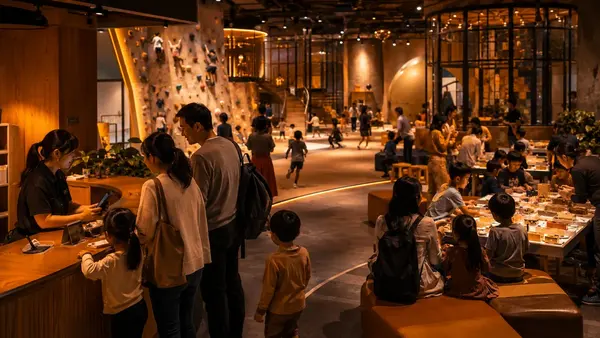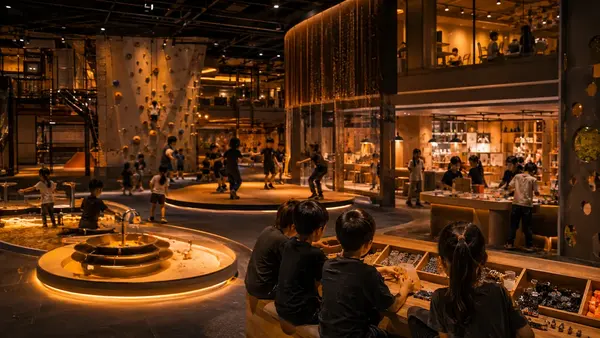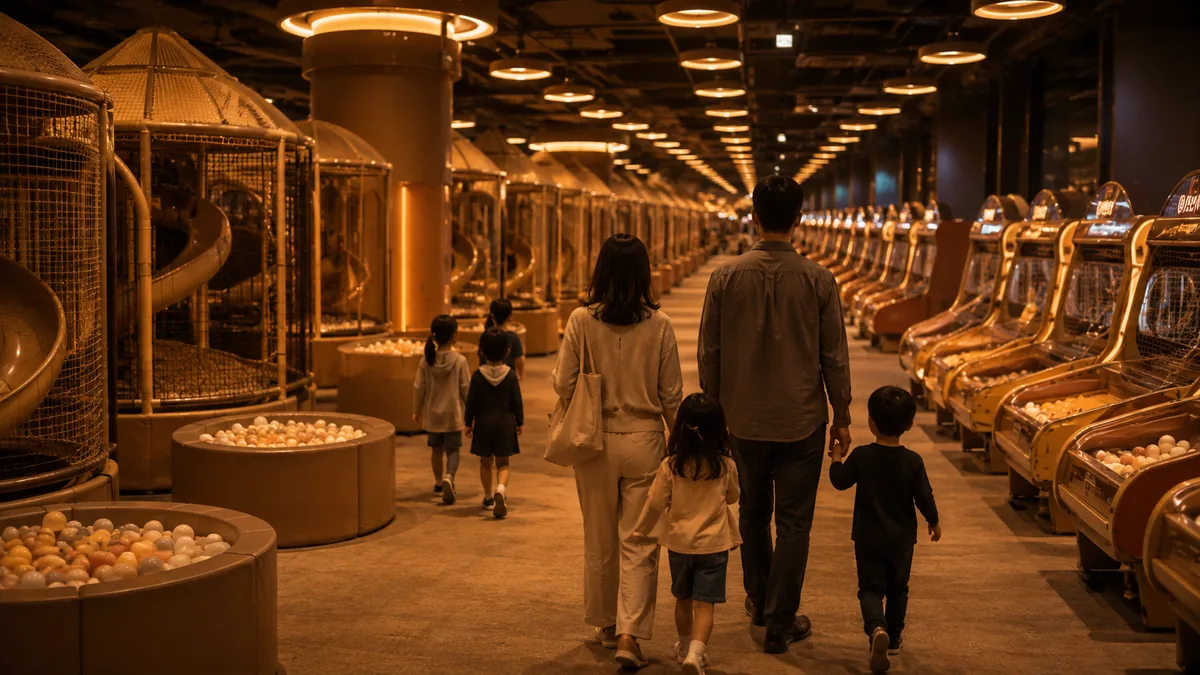
Novelty is one of the strongest forces behind an opening. A new family entertainment center has a built-in advantage: children do not know what is around the next corner. The first climb, first slide, first game, first maze, and first discovery all carry an emotional premium simply because they are unfamiliar.
That premium does not last forever. Once visitors understand the environment, the same attractions can remain enjoyable while losing part of their power to surprise. This is novelty decay — and it is not a small marketing problem. It is a structural challenge for any family entertainment concept that depends on repeat visitation.
Opening-Day Excitement Is Not a Retention Strategy
A venue can open with strong traffic, social-media attention, birthday demand, and curiosity from the local market. Those signals are valuable, but they should not be confused with durable loyalty. The more important question begins after the first wave of visits: what changes when a family comes back for the third, fifth, or tenth time?
If the answer is “the same attractions at the same difficulty in the same sequence,” then repeat visitation depends heavily on habit, proximity, discounts, or children simply tolerating repetition. That may work for some concepts, but it leaves a large amount of potential value unused.
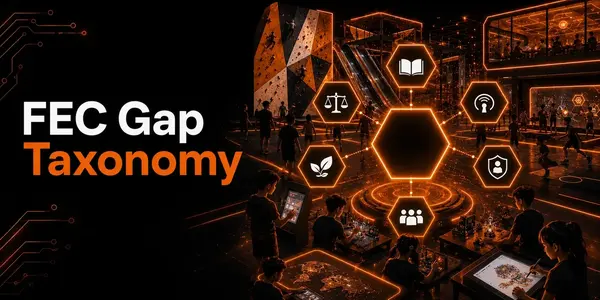
The FEC Gap Taxonomy groups Novelty Decay with related problems such as Attraction Fatigue, Content Refresh Deficit and Replayability Deficit. Together, they point to the same design requirement: reasons to return must be created deliberately.
Do Not Try to Solve Every Refresh Problem With Construction
The most obvious response to declining novelty is to add another attraction. Sometimes that is the right decision. New equipment can create a meaningful attendance spike and expand capacity. But physical replacement is expensive, slow, and difficult to repeat frequently enough to become the primary refresh mechanism.
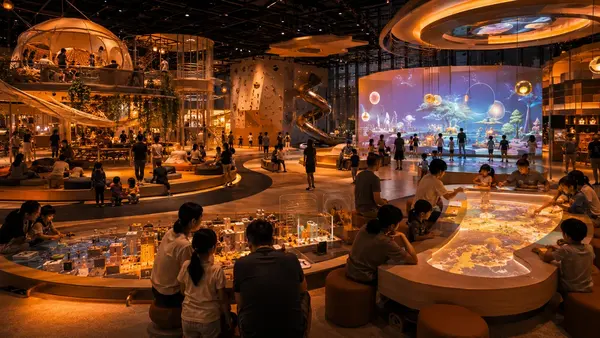
A stronger operating model separates the physical platform from the content layer. The platform may include ropes courses, climbing, interactive walls, creation stations, party rooms, a multipurpose hall, and flexible activity areas. The content layer can change much more frequently through missions, challenges, themes, competitions, workshops, stories, digital content, collectible systems, special events, and temporary installations.
That creates a different capital logic. Instead of rebuilding the park every time familiarity rises, operators can refresh the experience through programming and content while reserving major capital investment for changes that genuinely improve capacity, quality, or strategic positioning.
Design Several Return Loops, Not One
Families return for different reasons, so one retention mechanism is rarely enough. A robust concept can use several overlapping loops.
Weekly reasons to return
Clubs, workshops, tournaments, creator sessions, sports challenges, robotics programs, language activities, family competitions, and scheduled experiences can create a recurring weekly rhythm.
Monthly reasons to return
A Theme of the Month can change entrance displays, selected challenges, exhibitions, Planetarium content, creative prompts, competitions, and public events without changing the underlying park infrastructure.
Progression reasons to return
Levels, saved projects, next challenges, achievements, badges, personalized recommendations, and increasingly difficult routes give children a reason to continue rather than restart.
Social reasons to return
Friends, teams, clubs, school groups, competitions, showcases, community events, and familiar staff can create social commitments that equipment alone cannot reproduce.
Seasonal reasons to return
School breaks, holidays, camps, summer programming, exhibitions, limited missions, and annual signature events can add larger moments to the calendar.
The strongest parks do not rely on only one of these systems. They combine them so that a child who has already mastered the physical layout can still find a different program, a new challenge, a new social reason, or a project worth continuing.
Memberships Make Novelty Decay More Important, Not Less
It is tempting to assume that an unlimited membership automatically solves repeat visitation. In reality, membership increases the number of opportunities for the visitor to become familiar with the park. If the experience is static, an unlimited pass can accelerate fatigue.
A strong membership therefore needs more than discounted access. It should provide access to a changing ecosystem: member-only programs, saved progress, long-term challenges, special events, recurring clubs, project continuation, personalized recommendations, early registration, and reasons to participate throughout the year.
The core question is not “How many times can a member enter?” It is “How many meaningful next experiences can the park create for that member?”
Returning Families Should Not All Receive the Same Visit
Novelty can also be created through personalization. A first-time visitor may need orientation and broad discovery. A returning visitor can be directed toward unfinished projects, more advanced challenges, favorite activity categories, upcoming programs, or experiences they have not yet tried.
This is where digital identity can add value without turning the park into a screen-based environment. A profile, wristband, family account, or other persistent identifier can remember achievements and help the physical experience evolve around the visitor.
The result is simple but important: visit five can feel different from visit one even if much of the equipment is the same.
Programming Has to Be Operational, Not Decorative
Many FECs say they have events, but occasional holiday activities are not the same as a programming system. A real programming engine requires ownership, staffing, calendars, budgets, templates, communication, registration, measurement, and the ability to repeat successful formats.
Operators should know what changes every week, every month, every season, and every year. They should know which programs are designed for members, school groups, parents, preschool families, older children, or community partners. They should also understand how programs affect labor, capacity, food, retail, sponsorship, and conversion into future visits.
This turns novelty from a vague creative aspiration into an operating discipline.
Measure Repeat Value, Not Only Attendance
Total attendance can hide a retention problem. A park may continue attracting new customers even while previous visitors stop returning. Operators should therefore look at repeat behavior directly: first-to-second-visit conversion, visit frequency, membership retention, program participation, time between visits, birthday-to-return conversion, and the performance of changing content.
Qualitative feedback matters too. Ask returning families what felt new, what they skipped because they had already done it, what they want next, and whether children feel they are progressing.
The Strategic Test
Before opening, every new family entertainment concept should be able to answer several questions:
- What changes for a family after the first visit?
- What changes every week and every month?
- What can a child continue across visits?
- What becomes more advanced as the child improves?
- What brings parents back when the equipment is no longer new?
- Which experiences can be refreshed without major construction?
- What will be genuinely different six months after opening?
Novelty decay cannot be eliminated. Familiarity is a natural consequence of repeat use. But it can be designed around.
The goal is not to make every visit completely different. The goal is to build a park where returning means continuing, progressing, discovering, participating, and belonging — not simply repeating.